
The Towing Trend: Modern Utility Beyond the Airstream
Towing capability is rapidly transforming from a heavy-duty truck specialty into a defining trend for the modern family workhorse. Look closely at the current automotive market, and it becomes clear that nearly every new SUV, crossover, and van is being engineered to offer greater pulling power and rear-end capability.
To see just how mainstream this movement has become, look no further than my own mother’s brand-new Hyundai Tucson. It rolled off the dealership lot fully equipped with both the factory roof rack and the trailer hitch options. Will she ever actually tie down a kayak or haul a utility trailer down the interstate? I highly doubt it. But as she loves to tell me, it just looks kinda cool.
She isn't alone in that mindset. Automakers have realized that a rugged, multi-purpose aesthetic is a massive selling point, even if the vehicle's toughest weekly challenge is a crowded grocery store parking lot.
The reality of modern consumer behavior is driving this shift. The vast majority of everyday drivers have no intention of cross-country touring with a massive, dual-axle Airstream. Instead, the real value lies in micro-utility. Factory-backed towing configurations unlock effortless, real-world practicality: securely mounting multi-bike racks for a weekend trip, towing a standard 5x8 U-Haul trailer during a move, or hauling a couple of personal watercraft to the lake. This industry-wide emphasis on adaptive utility is a fantastic evolution, proving that a vehicle doesn't need a dual-wheel setup to be an absolute lifesaver on the weekend.
Honda’s Utility+ Package: The Ready-Made Ecosystem
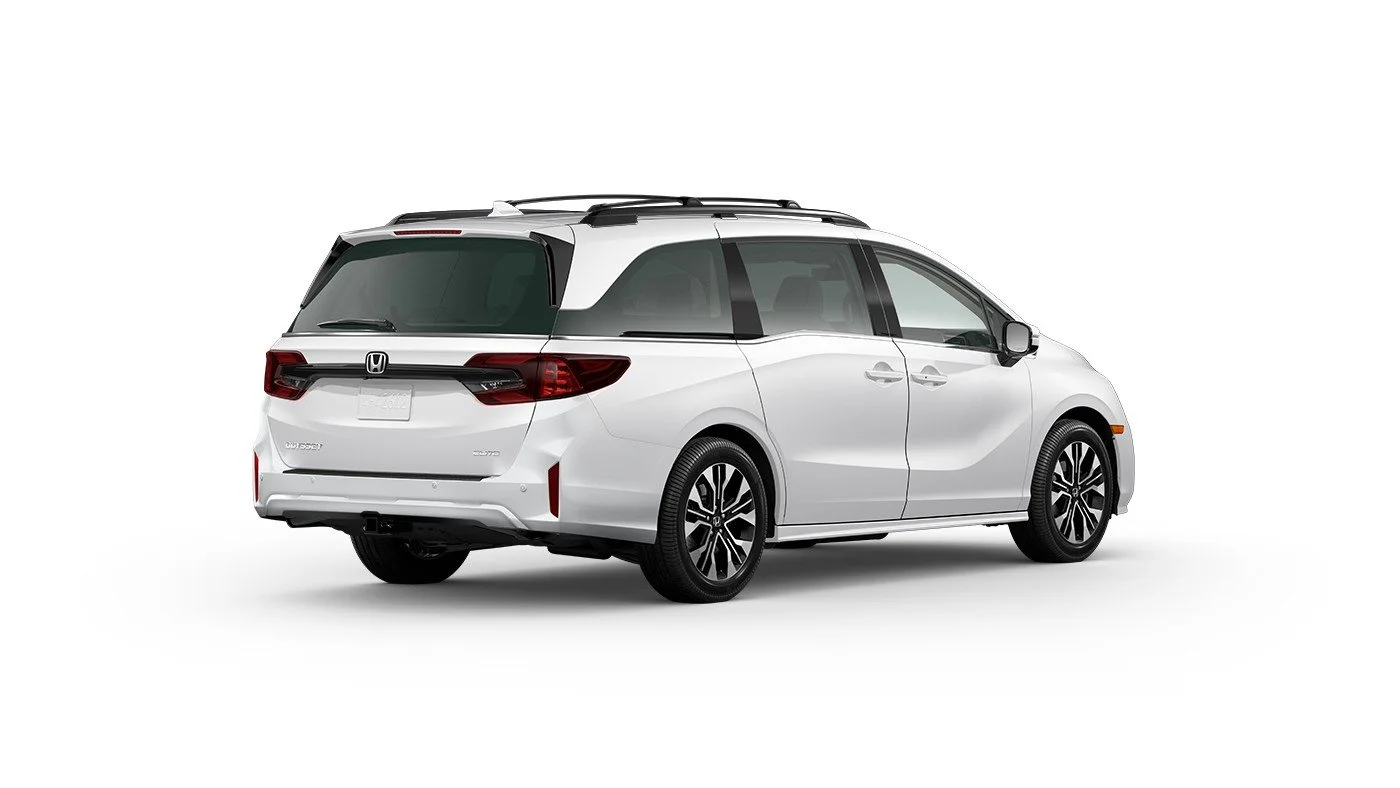
Automakers are answering this demand by moving away from complicated, piecemeal accessory catalogs and toward streamlined, factory-integrated packages. A prime example is Honda’s updated vehicle packaging strategy, which heavily emphasizes out-of-the-box readiness.
Rather than forcing buyers to source individual aftermarket parts, Honda introduces the Utility+ Package. The core concept is straightforward: take the comprehensive roof storage of their traditional utility configurations and directly marry it to factory towing hardware. The bundle is carefully curated to balance a rugged, cohesive aesthetic with immediate multi-purpose functionality:
Roof Rails: The foundation for overhead cargo management, cleanly integrated into the vehicle's roofline.
Crossbars: High-strength cross rails designed to accommodate everything from roof boxes to kayak mounts, boasting a robust 165-pound maximum load capacity.
Trailer Hitch: A factory-installed receiver that ensures immediate hook-up capability without needing to splice into vehicle wiring or cut into body panels later.
Volvo’s Hidden Engineering: The Retractable Towbar
While Honda attacks the trend with bundled packaging, Volvo approaches it with sophisticated, invisible execution. For drivers who want maximum utility without sacrificing the clean, minimalist lines of Scandinavian vehicle design, Volvo developed a semi-electric retractable trailer hitch.
Instead of a permanent steel receiver permanently protruding from beneath the rear bumper, Volvo’s hitch completely conceals itself when not in use. Operating the system requires zero manual lifting or crawling under the car:
Activation: The driver opens the tailgate and presses a dedicated button located cleanly on the right-hand side of the rear cargo area.
Deployment: An orange indicator lamp flashes as the hitch automatically unlatches and pivots downward from beneath the bumper.
Locking: With a swift, manual engagement, the hitch clicks firmly into its locked, load-ready position, and the indicator light turns solid orange.
When the weekend is over and the bike rack or utility trailer is disconnected, a single press of the button releases the mechanism, allowing the driver to fold it back out of sight. This blend of engineering ensures that premium family vehicles can seamlessly pivot from an upscale daily commuter to a highly capable gear-hauler in under ten seconds.
Tesla Model 3: Defying the Sedan Stereotype
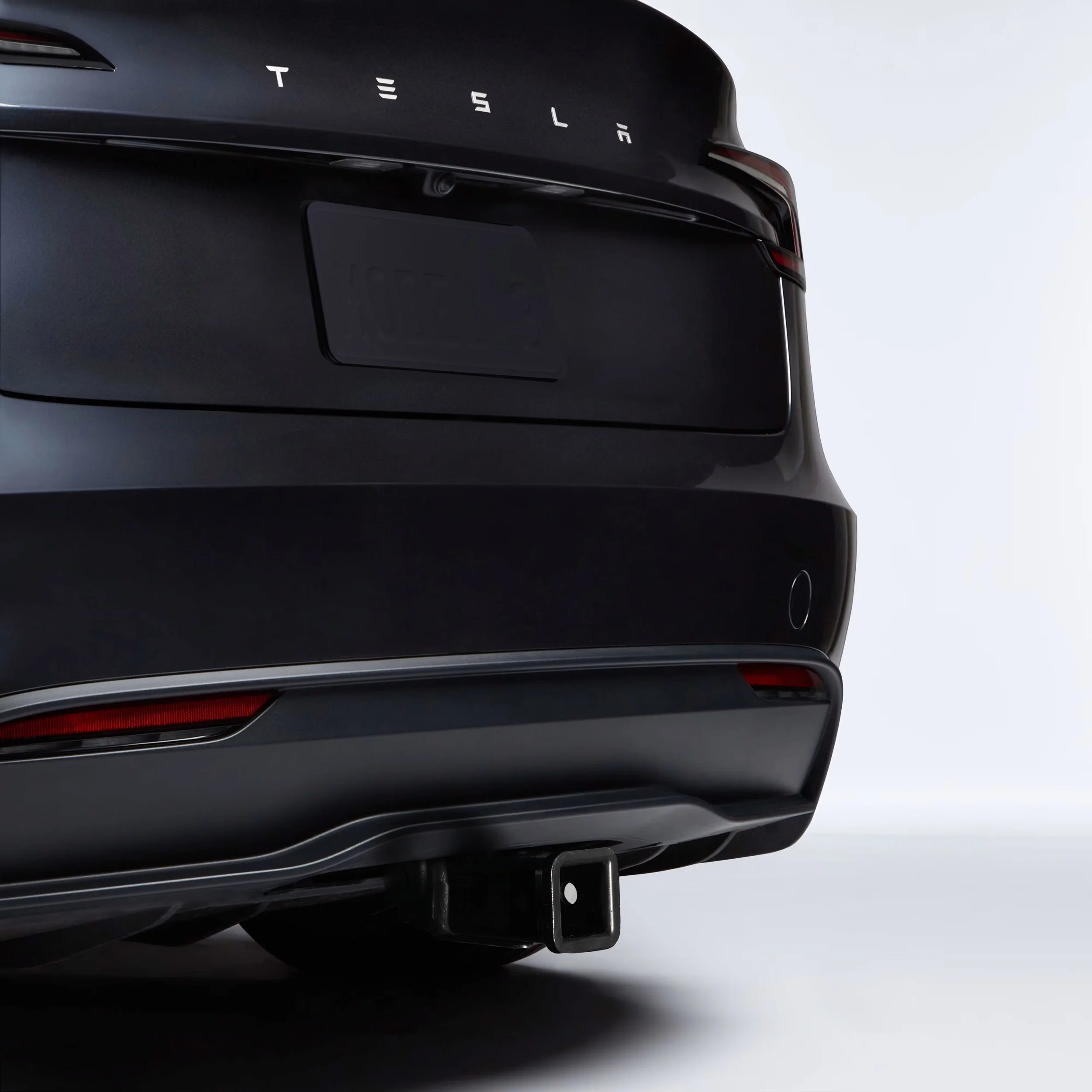
Perhaps the ultimate proof that towing has become a dominant automotive trend is its migration into the compact sedan segment—most notably with the Tesla Model 3. Historically, pulling a trailer was deemed entirely off-limits for small passenger cars in the North American market. However, recognizing the universal demand for cargo flexibility, Tesla officially introduced a dedicated, factory-backed Tow Package for its non-Performance configurations.
For $1,300, Tesla transforms an efficient electric sedan into a legitimate light-duty utility vehicle. The comprehensive package includes:
A high-strength steel tow bar paired with a standard 2-inch hitch receiver.
A North American standard 4-pin trailer wiring harness.
A dedicated Tow Mode software package that automatically adjusts the vehicle's regenerative braking, stability control, and torque distribution to safely accommodate trailing weight.
With an official towing capacity rated up to 2,200 pounds (1,000 kg), a Model 3 can comfortably pull a light utility trailer or safely support heavy, hitch-mounted platform bike racks. It completely rewrites the rules of what a compact vehicle can do, proving that utility is no longer defined by the size of the chassis, but by the intelligence of the factory options.
The New Benchmark of Family Vehicles
The collective push from brands like Honda, Volvo, Tesla, and Hyundai proves that towing capability is no longer an afterthought or an intimidating subculture reserved strictly for pickup trucks. It is a modern necessity. By simplifying packaging, concealing hardware, and optimizing electric powertrains for light-duty hauling, the automotive industry has made it easier than ever for everyday families to do more with the vehicles they already drive—even if they just want to look cool doing it.
What would you use your trailer hitch for?
